
Materials12 Apr 2026 · 7 min read
How to choose the right material for a wine label
Textured paper, clear PP or premium felt? A practical guide by budget, wine style and compatible finishes.
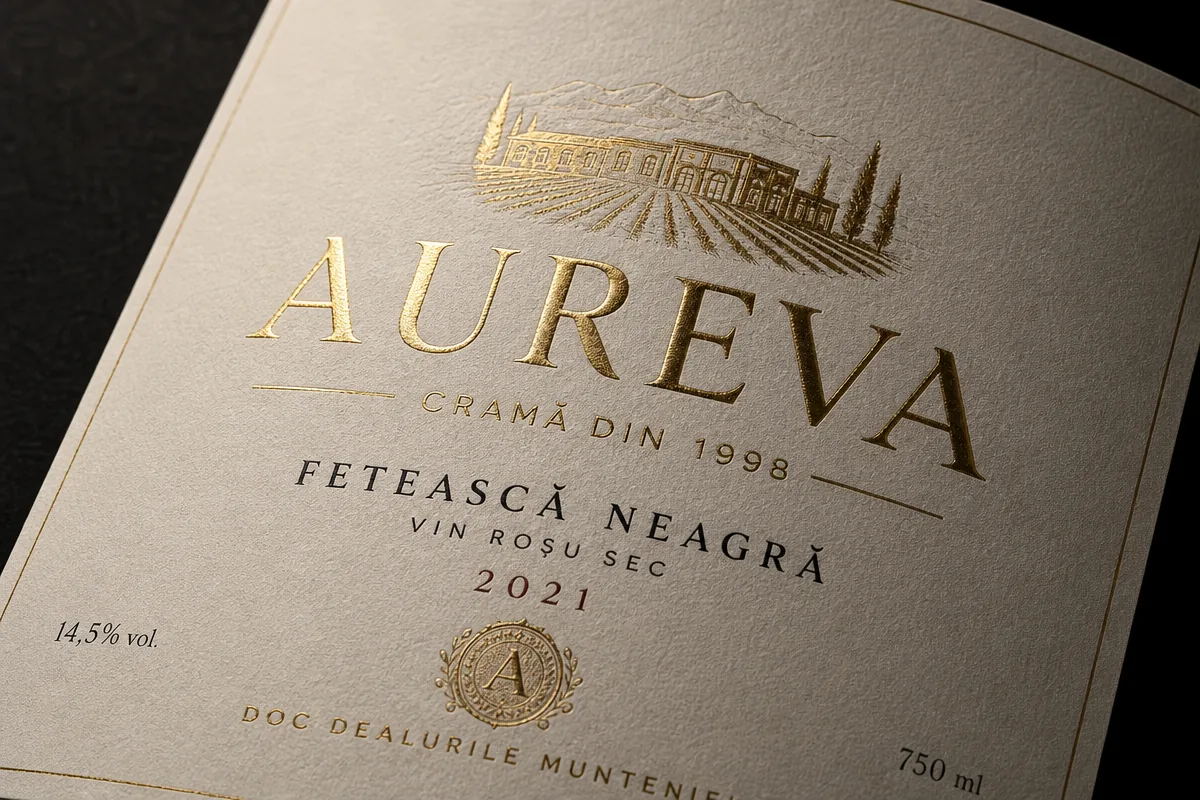
A wine label is, in 90% of shelf-side decisions, the first selling argument. The stock you pick shapes the premium perception and dictates how the label survives ice, condensation and friction in transport. Below we map the four material families we commonly use for wine labels produced digitally at Etichetaria, the selection criteria and the finishes that pair best with each.
1. Felt textured paper - tactile elegance
Felt papers (Constellation Snow, Modigliani, Splendorgel) feature a visible open-fibre relief. They are the safe pick for premium reserve-tier wines, especially classic reds and family-owned wineries.
- Pros: premium perception, tactile finish, very photogenic.
- Cons: not 100% condensation-proof; needs lamination or a protective varnish for ice buckets.
- Recommended finishes: gold or silver hot foil, die-press embossing.
2. Clear PP - the no-label look
Clear PP (Yupo Clear, MDV Clear) is a polypropylene film that visually merges with the bottle. It works spectacularly on rose and white wines served chilled, letting the liquid show through.
- Pros: water and condensation resistant, modern look, ideal for minimalist ranges.
- Cons: white underprint is mandatory under colours to avoid see-through.
- Recommended finishes: double white print, metallic hot foil, embosare.
3. Metallised paper - shine without foil
Metallised paper with a cold aluminium layer delivers full-surface shine. For sparkling wines, edition runs or holiday SKUs it gives dramatic impact at a fraction of full-foil cost.
4. Natural paper with wash-off adhesive
For returnable bottles (HoReCa, biodynamic) we use natural papers with wash-off adhesives that release completely in the industrial washer. The right pick for wineries that reuse glass.
Decide in 3 steps
- Step 1: define the serving context (chilled, room temperature, ice bucket).
- Step 2: pick the positioning (premium, lifestyle, classic, edition).
- Step 3: validate technically. Request the spec sheet and recommendations on 2-3 candidate stocks.
Bottom line: start from the bottle and the consumer, not from the printer. The wrong stock kills a good design. We send a technical quote and material guidance within 24h so you can decide before print.
About the author
Eduard Ciobanu · Founder, Etichetaria
Runs self-adhesive label production and the technical side of every order: material selection, the right adhesive for each container, finishes and print-ready artwork prep.
Next step
Get a custom technical quote in 24h, with material and finish recommendations.
Frequently asked
How do we size the right run for a wine label?
We work flexibly on launches and large repeat orders. Digital print lets us optimise the format and re-order rhythm to your bottling pace.
Does hot foil survive an ice bucket?
Yes, when applied on laminated stock or with a protective varnish. For bottles spending hours on ice, we recommend clear PP with metallic foil.