
Operations17 Sept 2026 · 8 min read
Labels for an online shop: barcodes and returns
In an online shop the label keeps stock clean, packaging coherent and returns under control. How to tie all three without expensive software.
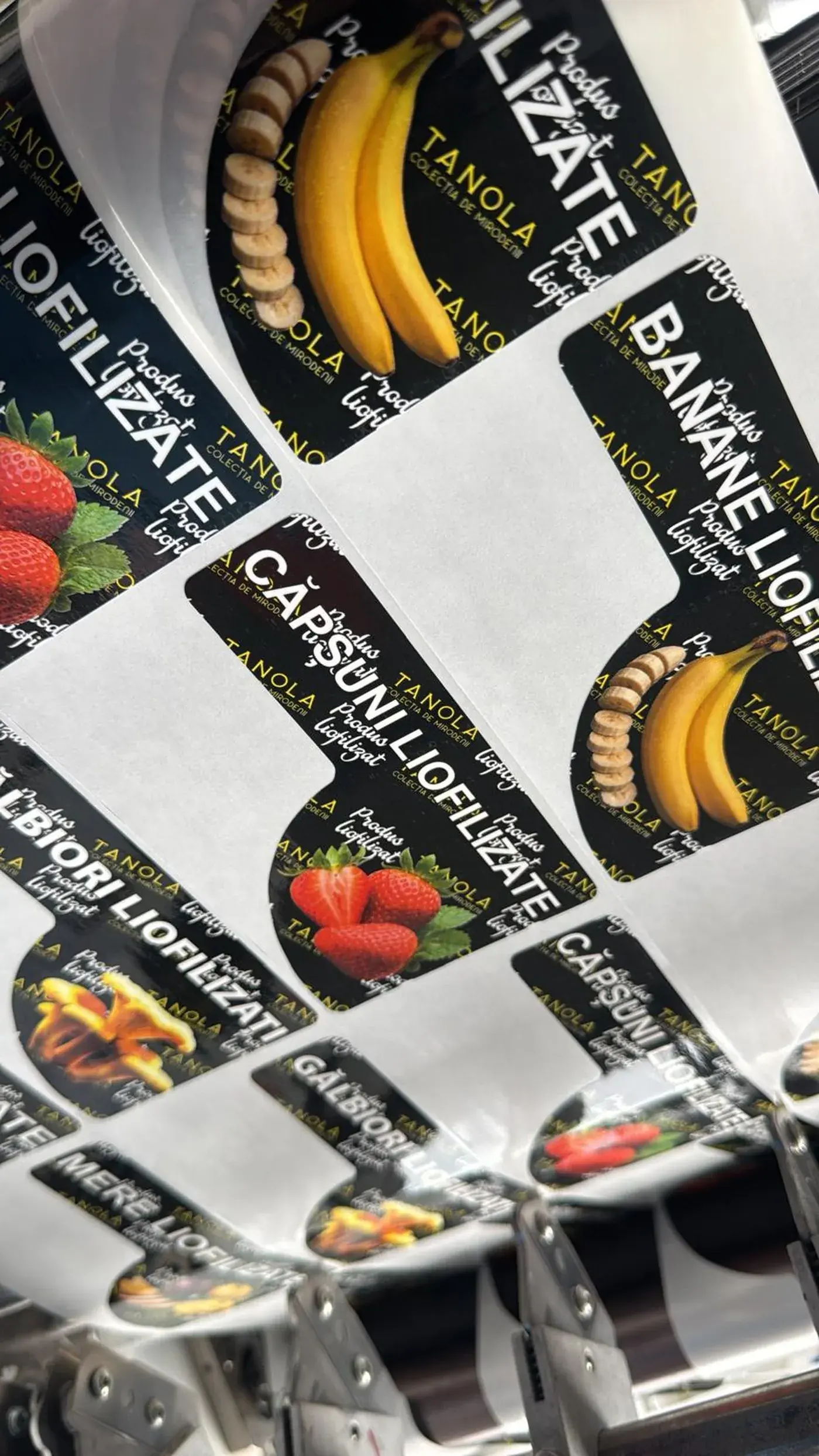
An online shop escapes the shelf conversation but inherits three others: fast product identification in the warehouse, packaging that reaches the customer, and returns that must be received correctly. All three run on labels, and the most common mistake is each area inventing its own system instead of one shared one.
Why the code on the product must match the platform
Because any gap between warehouse and sales platform turns into wrong stock, a cancelled order or a returned parcel. The code printed on the label, the code in the product record and the code in the campaign feed must be the same string, with no handwritten variants and no ad-hoc suffixes added by someone in the warehouse.
- One coding convention, written down and respected by everyone.
- A printed barcode, not marker on cardboard.
- Never two codes for the same product, even if it came from two suppliers.
- Colour and size variants get distinct codes from day one.
- Codes are generated in one place and flow from there to print.
You see the model clearly in shops listing accessories with many compatibility variants. A gadget shop like iQuality Store cannot run on approximate names: compatibility is stated per product, and the physical label repeats exactly what the listing says.
Which labels a small warehouse actually needs
Three families cover almost everything: product labels with a barcode, location labels for shelving, and packaging labels for the parcel. The rest are variations. The stock differs, because they live in different conditions: the product travels, the shelf stays, the parcel goes through a courier.
- Product: laminated paper or PP film, depending on handling.
- Shelf location: matte laminated paper, large type, readable from a distance.
- Parcel: paper with strong adhesive that grips recycled cardboard and cold surfaces.
- Pack seal: a round film label with the logo, keeping the box closed.
- Returns: a visually distinct label so goods never slip back into good stock by accident.
How packaging looks good without costing much
The best ratio between cost and impression comes from a plain box and a well-made label. A standard mailer, a round matte film seal with the logo and a properly aligned shipping label look better than a badly printed custom box, and cost considerably less at small volumes.
It is also the simplest marketing lever a small shop has: the parcel is the only physical moment in the whole customer relationship. A seal applied straight, a label with a short message and a QR code leading to an instructions page separate a parcel received from a parcel remembered.
If you put a QR code on the packaging, use a URL with campaign parameters, otherwise every visit shows up as direct traffic and you lose the trail. Setting conversion tracking up properly is exactly what a digital marketing agency such as the Zing Ads team does before touching budgets.
Returns: where small shops lose goods
Returned goods are rarely lost physically. They are lost as information: they land back in the warehouse and nobody knows if they are new, opened or faulty. A return label with date, condition and operator, applied at receiving, solves it better than any shared spreadsheet.
- Applied at receiving, not at the end of the day.
- Includes a handwriting zone even when the rest is printed.
- A different colour from good-stock labels, visible from two metres.
- Removable adhesive, so goods resold as new keep no residue.
How to organise shelving to cut order picking time
Warehouse order shows up directly in dispatch time. A simple location system, with large labels on the shelf end and small ones on each position, lets a new person find a product without asking anyone. You don't need software, you need a convention people follow.
- A location code made of aisle, level and position, in the same order everywhere.
- A large label on the shelf end, readable from the warehouse entrance.
- Best-selling products closest to the packing station.
- Removable labels on positions that get reorganised often.
- A printed spare set, so replacing a torn label takes a minute.
What changes when you start selling on a marketplace
Marketplaces impose their own labelling requirements on delivery and may require codes beyond your internal ones. The approach that avoids chaos is one product label that stays identical across channels, plus a separate label applied at dispatch for each channel's requirements.
Crucially, the channel label must not cover the internal code. If the product comes back as a return, you need your own code to restock it, and peeling one label off another almost always damages the one underneath.
When to move from in-house printing to digital print
A desktop thermal printer handles location and shipping labels well. It does not handle product labels that must look like a brand, because it prints no colour and the media choice is limited. The practical threshold is the moment the label reaches the customer's hands.
The combination that works for most small shops: product labels and seals printed digitally on rolls, with stock and finish chosen once for the whole range, plus shipping labels printed in-house since they change with every order.
About the author
Eduard Ciobanu · Founder, Etichetaria
Runs self-adhesive label production and the technical side of every order: material selection, the right adhesive for each container, finishes and print-ready artwork prep.
Next step
Get a custom technical quote in 24h, with material and finish recommendations.
Frequently asked
Can I print several different SKUs in one order?
Yes. Digital printing uses no plates, so several designs run in the same production, each with its own quantity. They ship on separate marked rolls so you don't mix them at application.
What label size suits a barcode?
It depends on code length and scanning distance, but the practical rule is never to shrink below the width where your scanner reads first time, tested on your actual scanner rather than on screen.
Does the label hold on recycled cardboard?
Recycled cardboard is porous and dusty, so it needs a high-tack permanent adhesive. A standard adhesive lifts at the corners, especially when the parcel sits cold in a courier van.
Are custom labels worth it at low volume?
They are worth it wherever the label reaches the customer: seal, product label, thank-you in the parcel. For internal use a thermal printer is enough and design spend makes no sense.