
Industries08 Sept 2026 · 8 min read
Cosmetics labels: what the law asks and what the shelf asks
A massage oil or a cream sells through its label and gets blocked at inspection through it too. How to fit mandatory copy into a design that works.
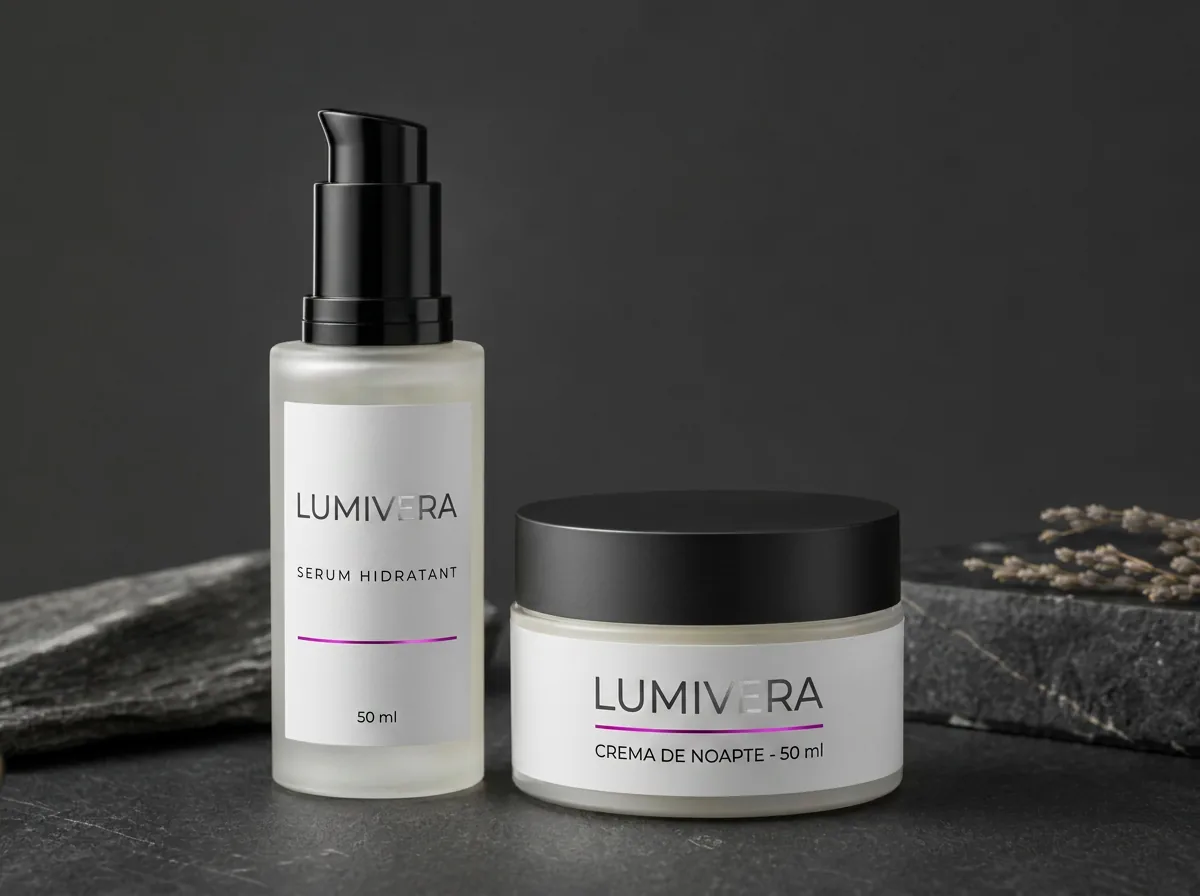
A cosmetic product has two audiences reading the same label for completely different reasons. The customer looks for what it is, who it is for and whether the brand looks credible, in about three seconds. The inspector looks for mandatory statements, their legibility and their match with the product file. When design happens before the copy list, the two collide and someone pays for a wasted run.
What must appear on a cosmetic label
A cosmetic placed on the EU market must show the product name and function, nominal content, minimum durability date or period after opening, precautions, batch code, the ingredient list in INCI nomenclature, plus the name and address of the responsible person in the EU. In Romanian for the local market.
The order on the surface is up to you, but legibility is not negotiable. In practice, a small bottle rarely fits the INCI list at a comfortable type size, so you either move to a peel-off booklet label or shift the list to the outer carton and keep the mandatory minimum on the bottle.
Why the copy is decided before the design
Because mandatory copy takes up fixed space, and what remains is all the designer actually has. If you start with a beautiful composition and add the INCI list, net content and warnings at the end, you get a cramped text block in a corner, barely legible, ruining the very impression you paid for.
- Write the complete list of statements first, in the market language.
- Measure the real available surface on the container, not on a mockup.
- Pick the minimum type size and check the text fits without compromise.
- Only then decide imagery, colours and finishes.
- Leave a clear zone for batch and date if you overprint them in production.
When a product sits in a grey area, such as cosmetics with therapeutic-sounding claims or supplements, the wording becomes a legal issue rather than a copywriting one. A short consultation through legal services for online business such as the Lawyerfy platform, costs less than pulling a batch off the market.
Which stock survives oil, cream and steam
Wellness products live in the dampest room of the house and get handled with oily hands. Uncoated paper absorbs oil and shows translucent stains within days. The safe choice is white or clear PP film, fully laminated matte or gloss, with a humidity-resistant permanent adhesive.
- Massage oil in PET or glass: white PP, matte lamination, permanent adhesive.
- Cream in a wide-lid jar: a lid label plus a body label, both on film.
- Scented candle in a jar: film on the body, safety label on the base.
- Bar soap in a paper band: laminated paper is fine if it never touches the product.
- Products used in a treatment room and wiped often: film with gloss lamination, easier to clean.
What a coherent range looks like across products
A range reads as a range when the fixed elements stay identical and only one variable changes. Keep the same stock, the same alignment system and the same logo position across products, then differentiate by colour, icon or product name. The customer recognises the brand from afar and finds the variant up close.
It also simplifies production. One stock and one finish set for the whole range means a single round of container tests and better predictability on reprints, no matter how often you tweak formulations.
This model works especially well for small brands built around a service: a studio selling the same oil it uses in treatments. A massage studio in Brasov such as Relax Studio already holds the client's trust from the treatment room, and a coherently labelled product continues that impression at home.
Mistakes that cost an entire run
- An INCI list copied from the base supplier and never updated after a formula change.
- Type size shrunk at the last minute to make copy fit, below the legible threshold.
- Missing period-after-opening on products with durability over thirty months.
- A label ordered without measuring container curvature, so it wrinkles on application.
- The batch zone covered with gloss lamination that the date printer cannot grip.
The last one is the most common among makers who code batches in-house. The fix is simple and decided before printing: leave an unlaminated window or use a matte lamination that coding ink adheres to.
Finishes that suit a personal care product
Matte lamination gives a treatment-room feel and hides fingerprints; gloss lifts colours and wipes clean more easily. Metallic foils and embossing work on limited editions, but need a flat surface and an application zone that isn't rubbed daily by shelf or hand.
- Matte: natural look, handwriting possible, hides fingerprints.
- Gloss: more saturated colours, easy cleaning, suited to treatment-room products.
- Metallic foil: short accents, not large areas, so the design doesn't tire the eye.
- Clear with no white underprint: only when you want the product to show through.
The practical rule is to pick the finish by how the product is handled, not by how it looks in a render. A bottle picked up dozens of times with oily hands looks nothing like the presentation image after a month.
What to send when you ask for a quote
The more concrete the brief, the more useful the recommendation. We need container type and dimensions, whether the surface is flat or curved, the real use environment, the final mandatory copy, whether you code batches in-house, and the look you want: natural, matte or gloss.
If you already have the container, a photo with a ruler beside it answers half the questions. The rest gets sorted in a few minutes, and the material recommendation comes with the reasoning behind it, not just a trade name.
About the author
Eduard Ciobanu · Founder, Etichetaria
Runs self-adhesive label production and the technical side of every order: material selection, the right adhesive for each container, finishes and print-ready artwork prep.
Next step
Get a custom technical quote in 24h, with material and finish recommendations.
Frequently asked
Can I put the INCI list only on the outer carton?
Yes. When the container is too small for legible text, the list can go on the outer packaging or a booklet label, as long as the information stays accessible to the buyer at the point of purchase. The container keeps the minimum statements.
Which stock for a massage oil in a glass bottle?
White PP film with matte lamination and permanent adhesive. It survives oil running down the bottle and repeated wiping, and matte gives that treatment-room feel rather than a cheap shelf look.
Can a whole range be printed with different run sizes per product?
Yes. Digital printing allows different quantities per variant in the same order, since there are no printing plates per design. Winding direction and stock stay common so application behaves identically.
How long from approved artwork to labels in hand?
Standard roll label production runs one to three working days after artwork approval, plus courier time. Special finishes can add time, and that is stated in the quote.
Do I need an EU responsible person if I produce in Romania?
Yes. Every cosmetic placed on the EU market has a responsible person with a name and address in the EU, shown on the packaging. If you produce and sell from Romania you are usually that person, but confirm it legally.